Oil Filtration of Distribution Transformer Near Me
Transformer oil plays a crucial role in the operation and lifespan of transformers.
- Contamination: Accumulation of dust, dirt, moisture, and other particles.
- Oxidation: Reaction with oxygen, leading to the formation of sludge and acids.
- Thermal Stress: High operating temperatures accelerate oil degradation.
Degraded oil loses its insulating properties, reduces cooling efficiency, and can cause damage to the transformer.
What is Transformer Oil Filtration?
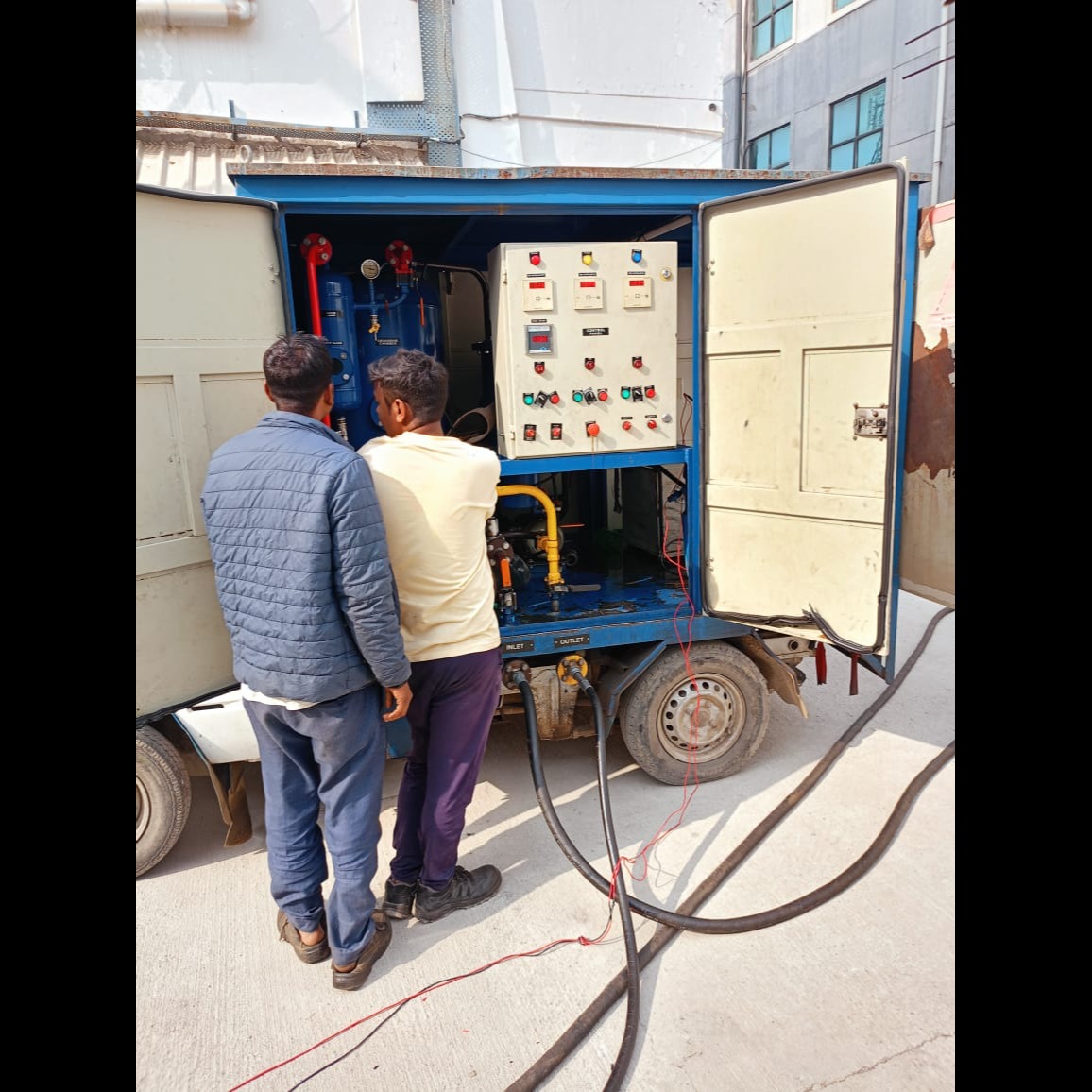
Transformer oil filtration is a process that removes contaminants and byproducts from the oil, restoring its original properties and ensuring optimal transformer performance.
- Particulate Matter: Dust, dirt, fibers, and other solid impurities.
- Moisture: Water content, which can significantly reduce dielectric strength.
- Gases: Dissolved gases that can lead to arcing and insulation failure.
- Sludge and Acids: Byproducts of oxidation that can corrode transformer components.
Benefits of Transformer Oil Filtration
- Extended Transformer Lifespan: By maintaining oil quality, filtration prevents premature wear and tear on the transformer.
- Improved Reliability: Clean oil ensures efficient cooling and insulation, reducing the risk of failures and downtime.
- Enhanced Performance: Restored oil properties lead to optimal transformer operation and efficiency.
- Cost Savings: Filtration is a cost-effective alternative to replacing the oil entirely.
- Environmental Protection: Proper oil maintenance reduces the risk of leaks and spills, minimizing environmental impact.
The Filtration Process
Transformer oil filtration typically involves the following steps:
- Pre-filtration: Removal of large particles using filters or strainers.
- Heating: Increasing the oil temperature to improve the efficiency of contaminant removal.
- Vacuum Dehydration: Removing moisture and dissolved gases under vacuum conditions.
- Fine Filtration: Removing smaller particles and contaminants using specialized filters.
- Degasification: Further removal of dissolved gases to enhance dielectric strength.
Types of Filtration Equipment
Various types of equipment are used for transformer oil filtration, including:
- Filter Presses: Use pressure to force oil through filter media.
- Vacuum Oil Purifiers: Employ vacuum and heat to remove moisture and gases.
- Centrifugal Separators: Use centrifugal force to separate contaminants.
When is Filtration Needed?
Regular oil testing is crucial to determine the need for filtration. Key indicators include:
- High Moisture Content
- Increased Acidity
- Low Dielectric Strength
- Presence of Sludge or Particles
Conclusion
Transformer oil filtration is a vital maintenance practice that ensures the reliable and efficient operation of transformers.