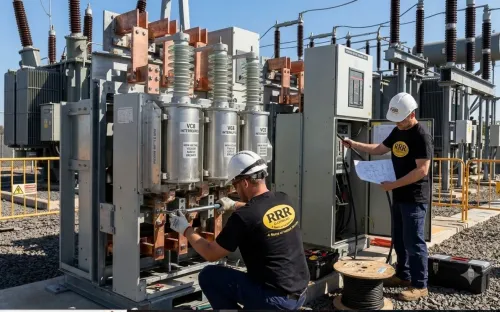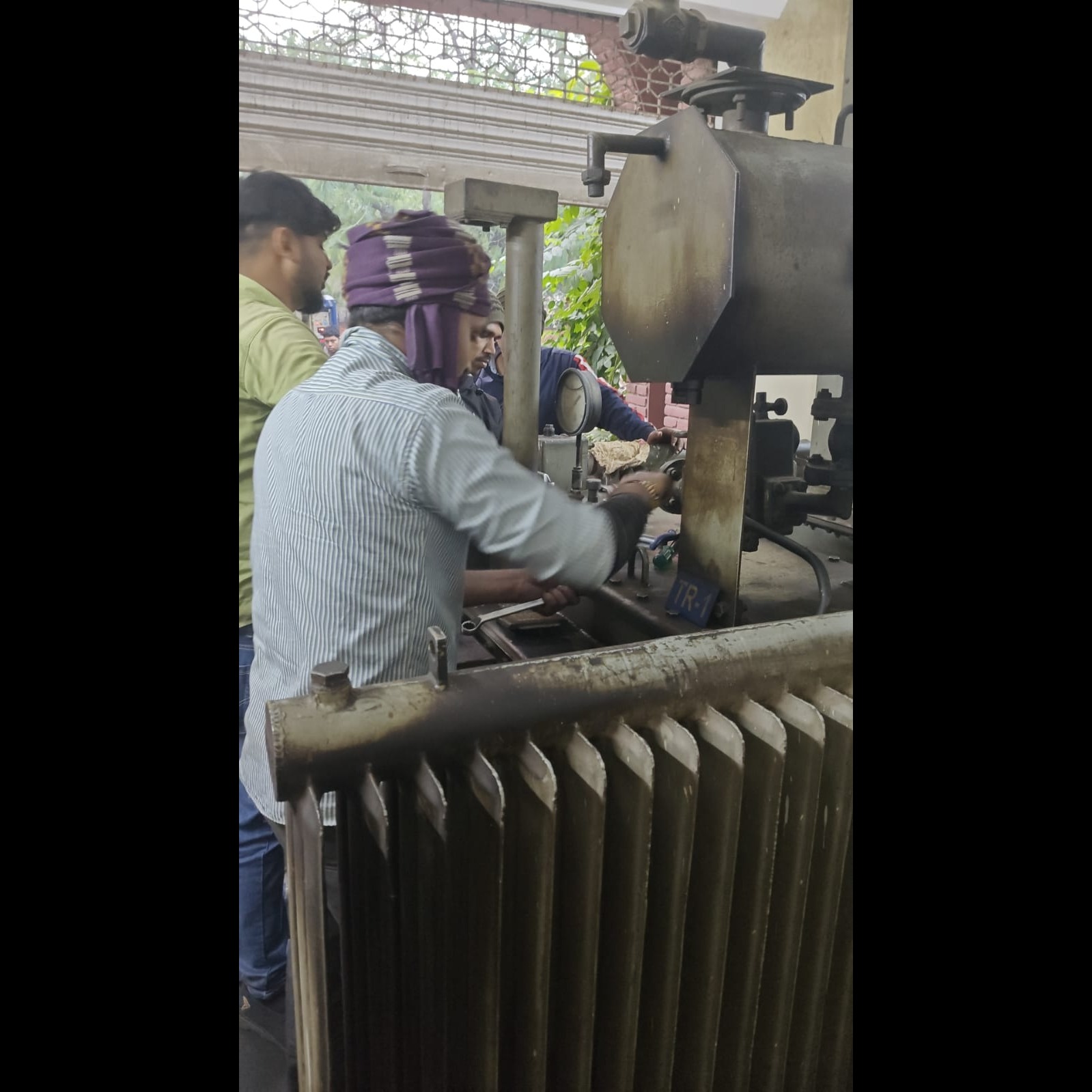
Transformers are vital components in electrical power systems, facilitating efficient voltage transformation for transmission and distribution. Ensuring their reliable and safe operation requires rigorous testing throughout their lifecycle, from manufacturing to in-service maintenance. This testing verifies various parameters, including insulation integrity, winding resistance, turns ratio, and overall performance.
Why is Transformer Testing Important?
- Reliability: Identifies potential defects and weaknesses, preventing premature failures.
- Safety: Minimizes risks of electrical shocks and other hazards through insulation and safety tests.
- Performance Optimization: Verifies adherence to design specifications and efficient operation.
- Extended Lifespan: Detects early signs of degradation, enabling timely repairs and extending service life.
- Cost Reduction: Minimizes downtime, repair costs, and energy losses by preventing failures and optimizing performance.
Types of Transformer Tests:
Transformer tests are broadly classified into:
1. Routine Tests (Performed on every manufactured transformer):
- Winding Resistance Measurement: Measures DC resistance to detect abnormalities or loose connections.
- Turns Ratio Test: Verifies the correct turns ratio between primary and secondary windings.
- Insulation Resistance Test (Megger Test): Assesses insulation quality between windings and between windings and the core.
- Polarity Test: Confirms correct winding polarity for proper connection in three-phase systems.
- No-Load Test (Open-Circuit Test): Determines core losses (hysteresis and eddy current losses) by applying rated voltage to one winding with the other open.
- Short-Circuit Test (Impedance Test): Measures copper losses (I²R losses) by shorting one winding and applying reduced voltage to the other to circulate rated current.
2. Type Tests (Performed on a prototype to validate design):
- Temperature Rise Test: Determines temperature rise under full load to ensure it stays within safe operating limits. This test often involves applying load until temperatures stabilize.
- Impulse Test: Simulates lightning strikes or switching surges to verify withstand capability against transient overvoltages. Standard impulse waves are used (e.g., 1.2/50 µs).
- Short-Circuit Withstand Test: Assesses the ability to withstand mechanical stresses caused by short-circuit currents.
3. Special Tests (Performed based on specific requirements):
- Partial Discharge Measurement: Detects and measures partial discharges within insulation, indicating potential degradation. Various methods are used, including electrical, acoustic, and chemical.
- Frequency Response Analysis (FRA): Assesses performance over a range of frequencies, important for applications with harmonics or non-sinusoidal waveforms. FRA can also detect mechanical changes within the transformer core and windings.
- Oil Quality Tests (for oil-filled transformers): Monitors insulating oil condition, including dielectric strength, moisture content, acidity, and dissolved gas analysis (DGA). DGA is particularly important for detecting incipient faults.
- Dielectric Tests: These include applied voltage tests (AC and DC) and induced voltage tests to verify the insulation strength of the transformer.
Common Testing Equipment:
- Megohmmeter (Megger): Measures insulation resistance.
- Multimeter: Measures voltage, current, and resistance.
- Power Analyzer: Measures power, voltage, current, and other electrical parameters.
- Impulse Generator: Generates high-voltage impulse waves.
- Partial Discharge Detector: Detects and measures partial discharges.
- Frequency Response Analyzer: Performs frequency response analysis.
- Oil Testing Kits: Perform various oil quality tests.
Conclusion:
Transformer testing is crucial for ensuring the reliability, safety, and efficient operation of electrical power systems. By conducting appropriate tests throughout the transformer\'s lifecycle, potential problems can be identified and addressed, leading to improved performance, extended lifespan, and reduced costs. Regular testing and maintenance are vital for maximizing the return on investment and maintaining grid stability.